--------------------------------------------------------------------------------
HONORS BIOLOGY
--------------------------------------------------------------------------------
AGENDA:
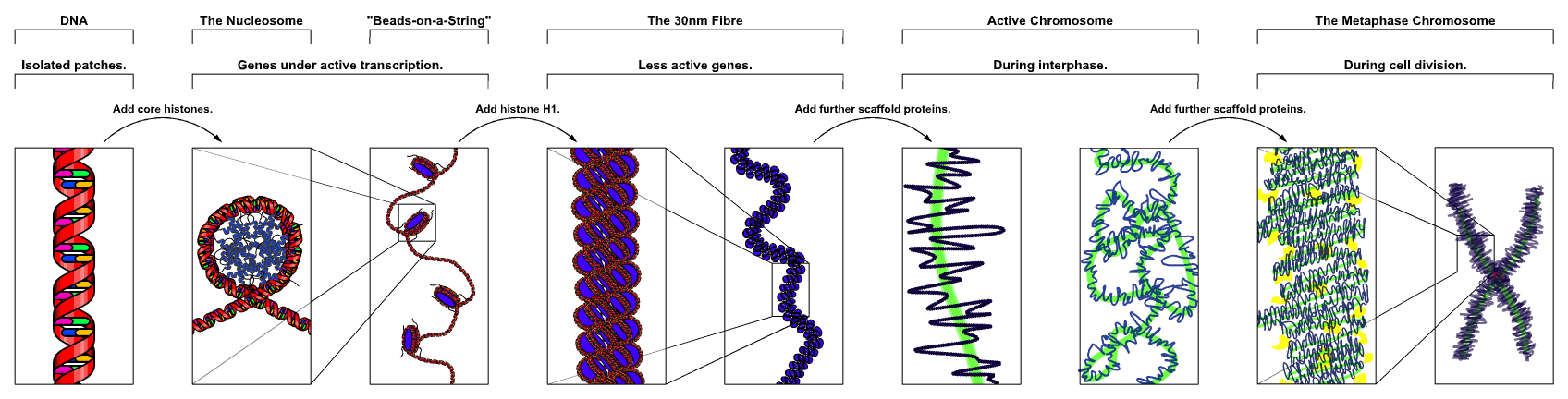
- Objectives: Use credible scholarly scientific literature to determine and report on the structure of DNA and the mechanisms / biomolecular machinery used in cells to build, repair, and copy this molecule
- Warm-up: Where is DNA usually found in most eukaryotic cells? What is the major function of DNA in all cells?
- ESLP Spring Projects [5]
- Overview of DNA structure and replication [20]
- Start DNA origami
- Use the 3-D Animation Library at the DNA Learning Center to better understand DNA structure and replication and to find accurate answers for the DNA wrapping/replication questions
OUTSIDE OF CLASS:
- Finish DNA wrapping/replication questions
- Finish DNA origami
NOTE on Spring ESLP Projects:
- Students may complete multiple projects—minimum requirement this time is two projects
- First project must be completely submitted by Friday, March 17th
- Second project must be completely submitted by Friday, June 2nd
- In addition to your finished product/task, you must also create a Blogger blog to show your (1) project outline/plan, (2) timeline, (3) budget statement, and (4) progress journal (series of blog posts) with photos. BioSITE participants will be invited to existing blog—see me to get an invitation to blog
--------------------------------------------------------------------------------
AP ENVIRONMENTAL SCIENCE
--------------------------------------------------------------------------------
AGENDA:
- Objectives: Be able to (1) describe the general characteristics of forests / woodlands, (2) explain how forests are used by humanity and the impacts our actions in/on forests have on all parts of the biosphere, and (3) discuss how humans can rethink our relationship with forests to ensure indefinite existence for both
- Warm-up: What is a forest? Give an example. Do forests have value? Explain. [10]
- Unit 7: Land Use: Overview [5]
- Unit 7: Lecture 1: Forests [25]
- Unit 7: Lecture 2: Forest Management [25]
- Class discussion: SFI and FSC: Greenwashing for timber and paper industry or legitimate consumer labeling programs?
OUTSIDE OF CLASS:
- Read pp. 218-233 in Miller
- Read Healthy Forests Initiative summary (fact sheet)
--------------------------------------------------------------------------------
BIOLOGY
--------------------------------------------------------------------------------
AGENDA:
- Objectives: Use credible scholarly scientific literature to determine and report on the structure of DNA and the mechanisms / biomolecular machinery used in cells to build, repair, and copy this molecule
- Warm-up: Where is DNA usually found in most eukaryotic cells? What is the major function of DNA in all cells?
- ESLP Spring Projects [5]
- Overview of DNA structure and replication [20]
- Start DNA origami
- Use the 3-D Animation Library at the DNA Learning Center to better understand DNA structure and replication and to find accurate answers for the DNA wrapping/replication questions
OUTSIDE OF CLASS:
- Finish DNA wrapping/replication questions
- Finish DNA origami
NOTE on Spring ESLP Projects:
- Students may complete multiple projects—minimum requirement this time is two projects
- First project must be completely submitted by Friday, March 17th
- Second project must be completely submitted by Friday, June 2nd
- In addition to your finished product/task, you must also create a Blogger blog to show your (1) project outline/plan, (2) timeline, (3) budget statement, and (4) progress journal (series of blog posts) with photos. BioSITE participants will be invited to existing blog—see me to get an invitation to blog
---
--
-